 MAKIN
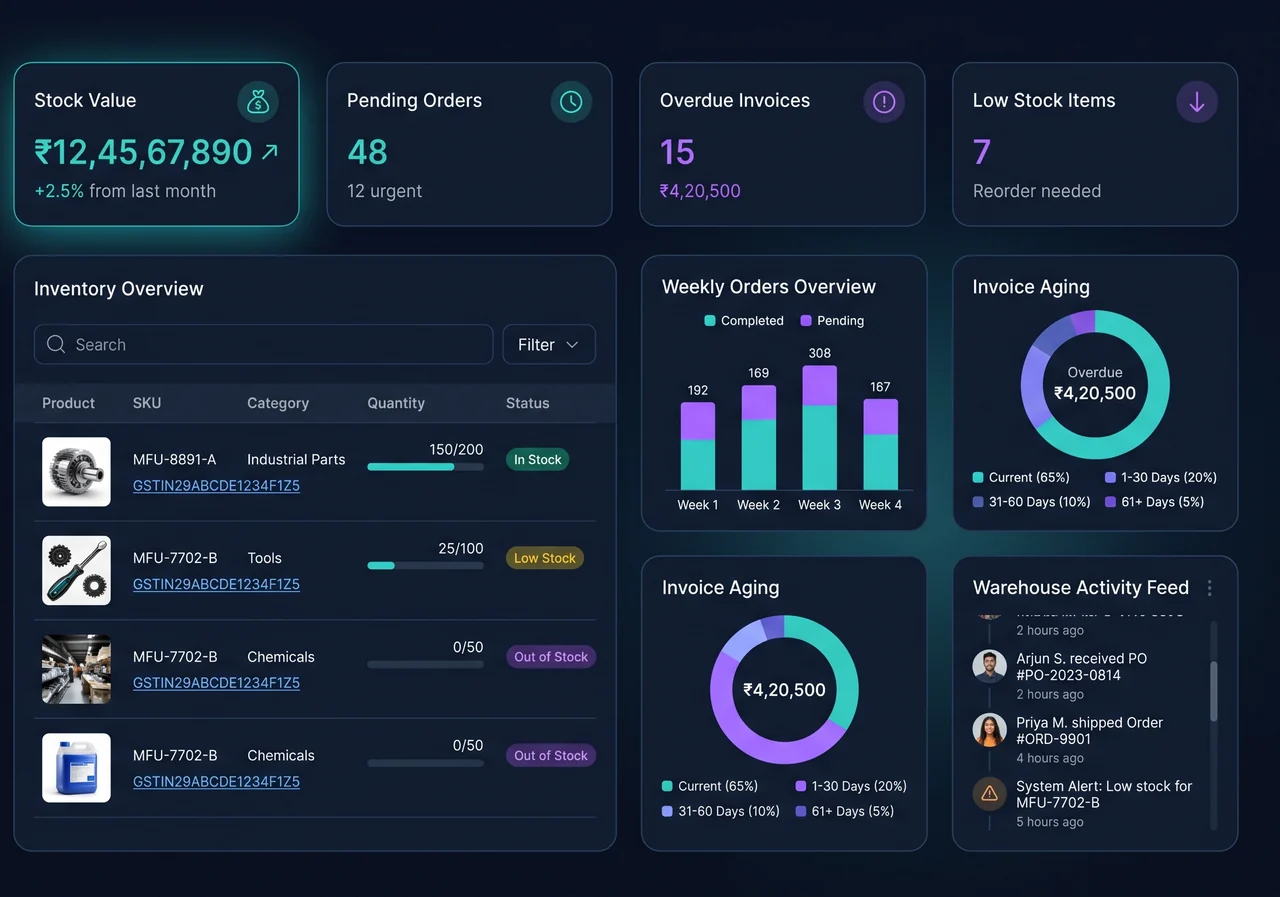
Amazon and Flipkart inventory sync from a single stock number
What’s included
01- ✓Marketplace and POS connectors
- ✓Near real-time stock reconciliation
- ✓Price and offer sync rules
- ✓Returns and RTO handling
- ✓Oversell prevention buffers
- ✓Channel-wise margin reporting
The details
02Why do multi-channel sellers oversell?
Because each channel keeps its own count. A unit sells in your shop, the marketplace listing still shows it, and a second customer orders it online. Or a return comes back and sits in the store for days before anyone adds it back to stock. Each mismatch is small, but across several channels they add up to cancelled orders and disappointed customers.
This package keeps one stock number and pushes it to every connected channel. Stock is reconciled in near real time, and oversell prevention buffers hold back a small quantity on the channels you choose, so a delay in one channel’s update is less likely to become an order you cannot fill.
What happens with returns, RTO and pricing?
Returns and RTO — orders that come back undelivered — are handled as their own flow, so a returned unit goes back into stock through a defined step rather than whenever someone remembers. Price and offer sync rules decide what each channel shows: the same price everywhere, or a different price and offer per channel, set as rules instead of edited listing by listing.
Channel-wise margin reporting then puts each channel side by side, so a decision about where to push stock, or where to raise a price, is made on margin rather than on sales volume alone. Which costs count against each channel is agreed on the scope call and written into the proposal.
Which channels does it connect?
The package is built around your own store, Amazon, Flipkart and your own website, with marketplace and POS connectors included. Amazon and Flipkart both offer seller APIs for stock and orders, which is what makes near real-time reconciliation possible; how often each channel can be updated depends on what its interface allows. Your POS, and any marketplace beyond Amazon and Flipkart, is confirmed on the scope call.
What does stock sync not do?
This is stock sync, not accounting. Posting marketplace sales into Tally is covered on our Amazon and Flipkart to Tally page, which pairs this package with Tally Integration & Automation (₹12,000). It is not a storefront either: Shopify Store Setup starts at ₹15,000, and a full E-commerce Build at ₹50,000.
Nor is it a full ERP. Purchase, production and multi-site warehouse rollouts belong to ERP & Inventory Rollout (₹1,75,000, 3 months or more). Listing content, marketplace advertising and account management are outside this package too; its job is keeping stock, prices and margins straight across the channels you sell on.
How it works
03- 0115-min callTell us what’s breaking. We ask the questions that change the price.
- 02Scope in writingA fixed quote and a written scope: what’s in, what isn’t.
- 03Build & reviewWorking software early, with review rounds on real screens.
- 04LaunchWe go live with you, train your team and hand over access.
- 05SupportFixes, changes and growth on a retainer, if you want one.
FAQ
04What does Amazon and Flipkart inventory sync cost?
Retail & Marketplace Stock Sync starts at ₹50,000 and is delivered in up to 30 days. Connectors, buffers and price rules are set up channel by channel, so the scope call starts with where you sell and which system you trust for stock today. Your fixed price arrives in writing after a 15-minute scope call.
Will it stop overselling completely?
No system can promise that, because each channel updates on its own schedule. What the package does is keep one stock number, reconcile it in near real time, and hold oversell prevention buffers on the channels you choose, so the gap between a sale and every channel knowing about it is cushioned rather than left open.
Where does the master stock number live?
The stack on the package card is Node and Postgres. Which system holds the master count — this sync, your POS or an inventory tool you already use — is decided on the scope call and written into the proposal, so every channel knows which number to trust.
Can we sell at different prices on Amazon and our own site?
Yes. Price and offer sync rules let each channel carry the same price as the others or one of its own, with offers set per channel. The rules are agreed with you on the scope call, and channel-wise margin reporting then shows what each channel returns at those prices.
Does it include our physical shop?
Yes. POS connectors are part of the package, so sales in the shop reduce the same stock number the marketplaces see. Which POS you use, and whether it can share stock and sales with another system, is one of the first things checked on the scope call.
More in ERP
05Also see
0615 minutes.
One quote.
Tell us what you need. We reply on WhatsApp or email with a time, and a written quote after the call.
Re: Retail & Marketplace Stock Sync